






WYZE Bulb Cam: A Closer Look at the 2K Security Camera That Screws Into a Light Socket
Smart home security often involves a trade-off between capability and convenience. You might want a camera in a particular spot, but running power to it or finding a clean mounting surface can complicate the project. The WYZE Bulb Cam takes a different approach by combining a 2K HD security camera with a standard light bulb. It’s a concept that aims to turn an ordinary lighting fixture into a surveillance point, and it’s worth examining what this hybrid device actually brings to the table.
Design & Build: The Bulb Form Factor
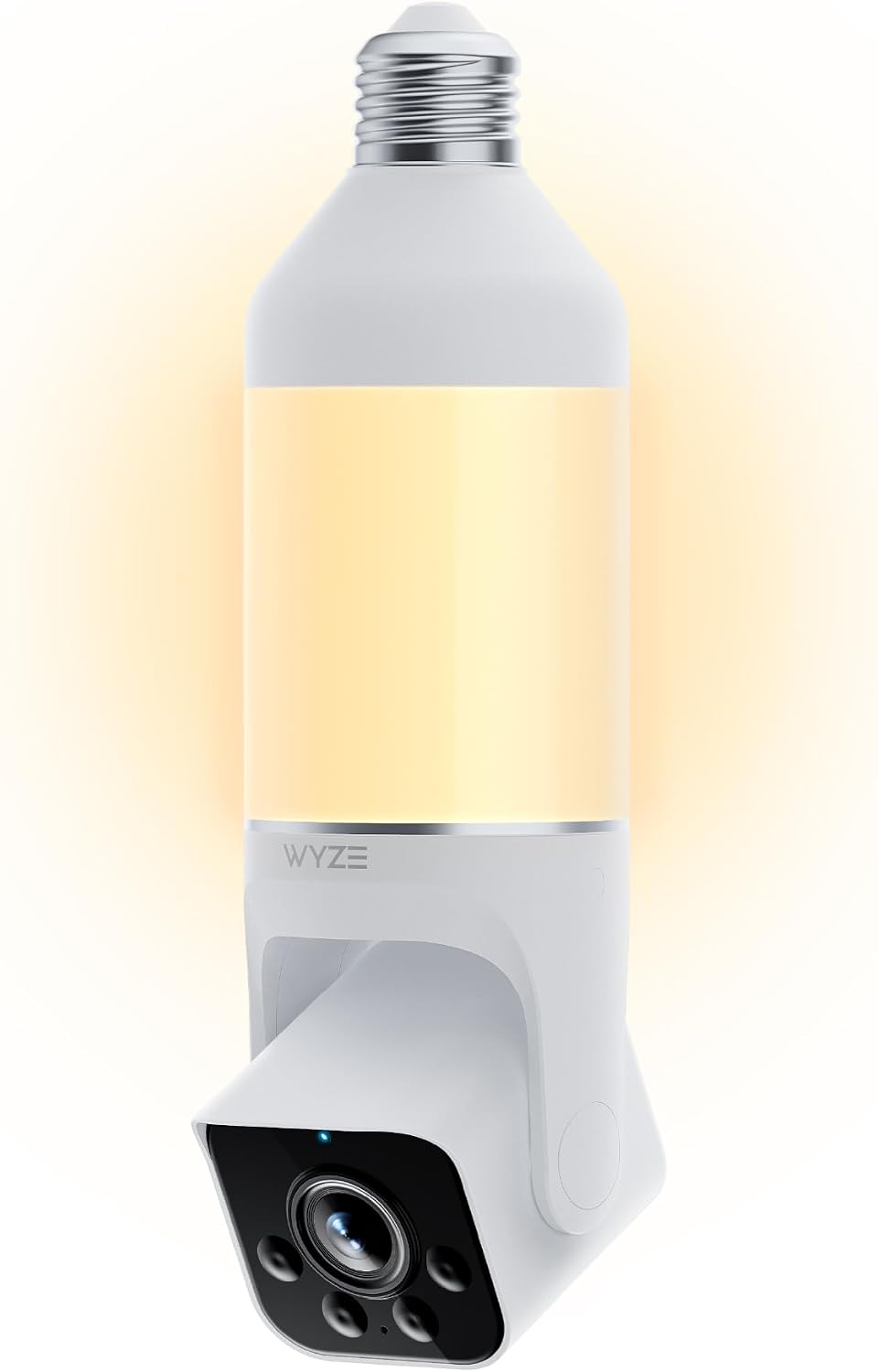
At its core, the Wyze Bulb Cam is designed to fit into a standard E26 light socket. This is the common screw-in base used by countless household light bulbs in North America, which means the installation process is conceptually as simple as changing a bulb. The device is intended to operate on standard 120V, 60Hz electrical systems, which aligns with typical residential wiring in the United States and Canada.
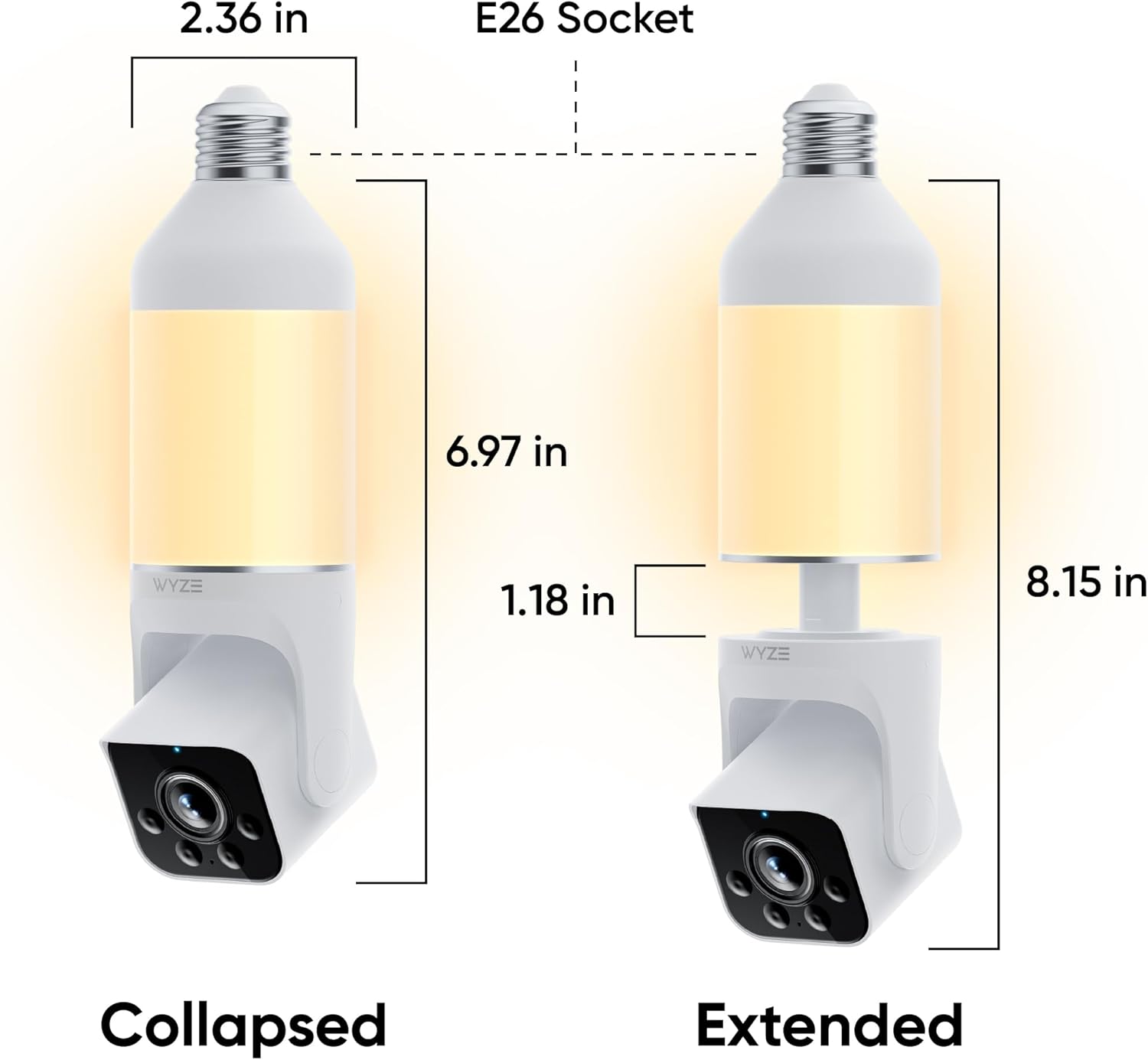
One of the most important design details is the physical size and shape of the unit. Because it is meant to replace a bulb, its dimensions must work within the confines of an existing light fixture. The product information specifically highlights a telescoping rod that extends up to 1.2 inches. This feature appears to be a solution for a common problem: wall sconces and other enclosed fixtures often have limited depth. The rod allows the camera portion of the bulb to protrude slightly further out from the socket, which can help it clear the shade or housing of a shallow fixture.
However, this design choice brings a critical caveat. The manufacturer explicitly advises verifying sconce compatibility before purchasing. The telescoping rod extends to a maximum of 1.2 inches, and the overall fit depends on the depth of the fixture you intend to use. If a sconce is too shallow, the Bulb Cam may not fit properly. This is not a universal replacement for every light fixture; it is a device that requires a bit of pre-purchase measurement on your part.
Features & Technology: Merging Light and Surveillance
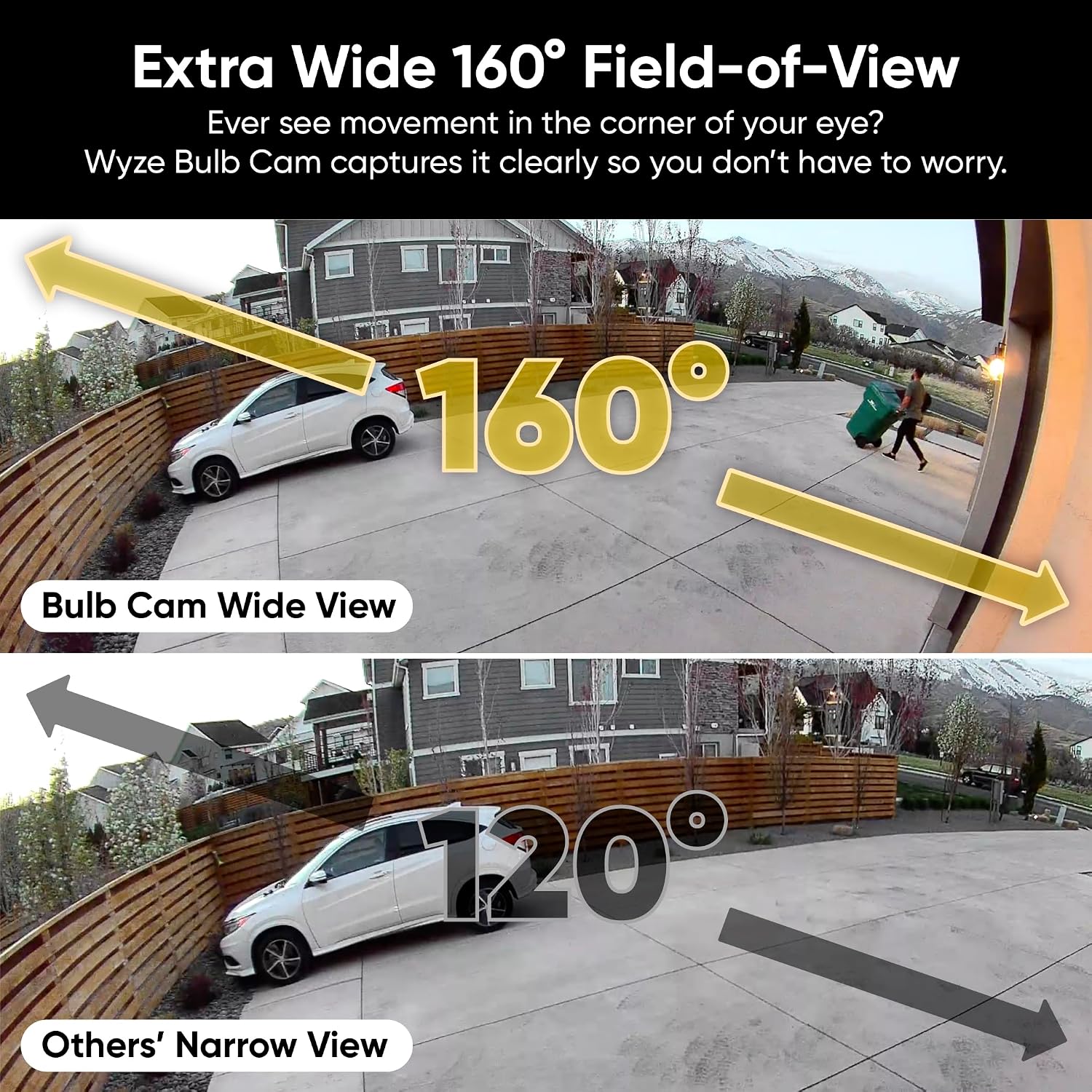
The primary feature of the Wyze Bulb Cam is its dual functionality. It serves as a source of illumination while simultaneously acting as a security camera. The camera itself is rated for 2K HD video, which indicates a high-resolution image sensor capable of capturing detailed footage. This level of detail is generally considered suitable for identifying faces or reading license plates at a reasonable distance, although the exact field of view and lens specifications are not provided in the supplied information.
The integration of a camera into a bulb housing is a space-saving solution. It eliminates the need for a separate camera mount, a dedicated power cable, or a battery that needs periodic recharging. By using the existing wiring of a light socket, the device simplifies the installation process significantly. For someone who wants to monitor a porch, a hallway, or a garage, this could reduce the setup time to just a few minutes.
That said, the device is not without its limitations. The most significant restriction is the explicit warning: DO NOT USE WITH A DIMMER SWITCH. This is a hard constraint. The Bulb Cam is designed for standard on/off wall switches only. Using it on a dimmer circuit could potentially cause issues with the camera’s electronics or the light output, and the manufacturer has clearly marked this as a prohibited use case. If you have dimmer switches in your home, you will need to identify a fixture controlled by a standard switch or replace the dimmer before installation.
Performance & Everyday Experience: Practical Considerations
Thinking about how this device performs in daily use, the most obvious consideration is the trade-off between lighting and security. The camera is housed inside the bulb, which means its viewing angle is tied to the orientation of the socket. If a light socket is positioned to point straight down from a ceiling, the camera will have a downward-facing view. If it is in a wall sconce, the view will be horizontal. This is a fundamental difference from a standalone camera that you can angle and rotate freely. You are essentially relying on the pre-existing orientation of the light fixture to provide the desired camera angle.
The telescoping rod feature is a thoughtful addition for improving the camera’s field of view. By extending the camera slightly out of the fixture, it might reduce obstructions caused by the shade or the rim of the sconce. This could make the difference between a clear view of a room and a view partially blocked by the fixture’s housing.
Another practical point is the power dependency. Since the Bulb Cam is powered by the light socket, it will only function when the socket provides power. If the wall switch is turned off, the camera will lose power and stop recording. This is a crucial operational detail. You cannot use this camera to monitor a room if the light switch is off. In many security setups, you might want the camera to remain active while the light is off, but this device does not appear to support that scenario unless the switch is left in the on position. This means the Bulb Cam is best suited for areas where you are comfortable leaving the light on, or where the switch is controlled by a smart system that keeps it energized.
Connectivity & Compatibility: What You Need to Know
Before making a purchase decision, the compatibility checklist is the most critical piece of information. The device is strictly limited to standard E26 light sockets. It is not designed for smaller candelabra bases (E12) or larger mogul bases (E39). Additionally, the electrical rating is specified as 120V, 60Hz. This is standard for North American households, but it means the device is not suitable for regions with different voltage standards (like 220V systems common in Europe or Asia) without a voltage converter, which is not mentioned as an accessory.
The warning about dimmer switches cannot be overstated. This is a hard incompatibility, not a suggestion. If you have a dimmer switch controlling the target light fixture, you must either bypass the dimmer or choose a different location. Ignoring this warning could lead to malfunction.
Finally, the physical fit is a variable you must verify. The telescoping rod extends up to 1.2 inches, but the total length of the device is not specified in the provided data. The manufacturer’s instruction to “verify sconce compatibility before you buy” suggests that the physical dimensions are a known limitation. You should measure the depth and width of your intended fixture to ensure the Bulb Cam will fit without touching the shade or being blocked by it.
Who Is This Product Best For?
Based on the available information, the Wyze Bulb Cam is best suited for individuals who want to add a camera to a location that already has a standard E26 light socket. It is particularly relevant for areas where a separate camera would be intrusive or difficult to mount. For example, a front porch with a ceiling light fixture is a logical candidate. You could replace the existing bulb with the Bulb Cam and gain a view of the entryway without drilling holes or running cables.
It is also a reasonable option for indoor spaces like a hallway, a laundry room, or a garage where a light fixture is conveniently located. The key is that the user must be comfortable with the camera’s orientation being fixed by the socket, and they must be willing to leave the light switch on to keep the camera powered. This device is not ideal for someone who needs a flexible, pan-tilt camera or who wants to monitor a dark room without visible illumination.
Final Verdict
The WYZE Bulb Cam presents an interesting solution for a specific niche. It combines a 2K HD camera with a functional light bulb, offering a streamlined way to add security monitoring to a space with an existing E26 socket. The telescoping rod is a smart feature designed to help with shallow sconces, but it also highlights the device’s primary constraint: physical compatibility.
The strict requirements—standard E26 sockets, 120V/60Hz power, and a firm prohibition on dimmer switches—mean that this is not a universal product. It requires a bit of planning and measurement before purchase. The operational quirk of needing the light switch to be on for the camera to work is also a significant consideration for how you plan to use it.
For a homeowner with a suitable light fixture in the right location, the Bulb Cam offers a clever way to merge lighting and security into a single, easy-to-install device. For anyone with dimmer switches or unusual fixtures, it may not be the right fit. It is a product that works best when its specific requirements are met, and its success depends largely on the environment in which it is installed.